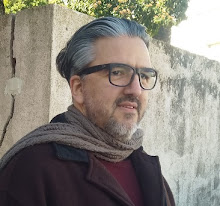
Ricardo Gross │ correio: rcgross@hotmail.com
9.01.2009
Bestinha

Peso: 105.200 kg
Altura: 1.90 m
IMC: 29
Índice Massa Corporal
< 19: Insuficiente
19-25: Normal
22: Ideal
26-30: Sobrepeso
> 30: Obesidade

Soundly right-wing

A sua afiliação ao Partido Republicano faz de si um bicho raro, no mundo do rock?
A minha afiliação é com os conservadores. Não sou republicano, sou de extrema-direita. Deus fez o Homem e a Mulher, as armas fizeram-nos iguais. É um facto da vida, não é culpa minha. O Governo nunca vai saber melhor do que eu como gastar o meu dinheiro. Isso faz de mim um outsider? Não, querida, porque eu estou dentro! Só quero as minhas armas e o meu dinheiro e que ninguém me diga o que fazer. Mas nunca uso o palco para dizer às pessoas em quem é que elas hão-de votar. Isso é muito feio: encantar as pessoas com música folk bonitinha e depois dar-lhes na cabeça e dizer-lhes em quem votar. As pessoas concordam que os políticos são todos uns sacanas mentirosos, então qual é a diferença entre Obama e George W. Bush? Porque é que hás-de preferir um ao outro? Porque te dá coisas grátis? Os traficantes, os chulos, os ladrões também. Além do mais o Ronald Reagan fez dos Ramones "marines" honorários, e isso para mim é que conta! Sou um republicano-Reagan, baby.
As pessoas preferem Barack Obama pelo seu carisma de estrela rock?
As pessoas gostam mais do Obama porque lhes dizem para gostarem mais dele. Desafio qualquer pessoa que goste do Obama a dizer-me uma coisa boa que ele tenha feito. Não fez. Gostam dele apenas pelo seu carisma. E todos nós aprendemos, com aquele patife do Bill Clinton, o que acontece quando confiamos num homem com carisma. Essas pessoas vão dar é cabo do mundo. Por causa do Bill Clinton, a China pode arrasar-nos com mísseis nucleares. O carisma para mim não quer dizer nada. Eu gosto de um tipo que se engasga a falar frente às pessoas, significa que está nervoso, que é normal. Obama é o meu presidente, eleito leal e legalmente pela maioria dos meus concidadãos, e por isso não vou falar mal dele. Até porque não acho que ele tenha feito coisas más: se quiseres julgá-lo pelo seu mérito, Obama respeita claramente George W. Bush, porque ainda não mudou nada!
[Leia por sua conta e risco o resto da entrevista com Jesse Hughes, no Jornal Optimus do Blitz]
8.31.2009
The taking of Sylvian 123
1. Isolamento/solidão
"I lead a very isolated existence and I spend 90 per cent of my days alone," he says. "It took me a while to acclimatise to that way of life and it's quite difficult to reacclimatise to interaction with other people, let alone performing to an audience. Sometimes it's in a solitude that feels profound and comforting and desirable, and other times it's isolating and completely lonely. But I've always thought that to produce something fresh or new or of value you have to withdraw yourself from the common influences of society, and so I felt that withdrawing myself in this way might enable me to do away with any kind of conscious or subconscious influences that society might have on me by living in cities, soaking in media. The further I get away from that, the more I feel that this is my true voice. There's only so much permeating the work from the outside. Of course, I can't take into account what other people bring into the work. But in terms of my perception of it, it has a clarity to it or an integrity that it might not have if I lived under any other kind of circumstances. I'm not saying I can continue to live in this way or wish to live in this way, or it may just be the way I continue to live for the rest of my days or wathever, but this work [Manafon, editado dia 14 de Set.] was born out of that environment, it was born out of isolation..."
2. Budismo/improvisação
There's a kind of Ginsberg idea which comes from Buddhist teachings: first thought, best thought... right thought. So it's that kind of idea: not to much revision in the process of writing, just follow it through and wherever it takes you, wherever it leads, however revealing it might be, or what is it revealing, you're probably not aware of at the time but you just kind of go through it, find the melody for it, within that framework. It's a very intuitive process, I can't say that it's an intellectual process."
"The more I work on a piece, the further it seems to get from the original improvisational nature, the mood, spirit and atmosphere of the original improvisation," he cautions. "I mean, I could have cut into it. I could have really gone to town on editing the work but I didn't, I left the original performances more or less intact, to keep that spirit, that continuity if you like, alive. I didn't want to cut into it too much. Individual performances within that duration, within that timeframe – sure, there were edits made. But generally the overall arc of the work is as is performed on the day."
3. Fé/humanidade
(...) the way he talks and writes about it, Sylvian is perhaps proudest of Manafon's title track, named for the village where Welsh poet RS Thomas lived, and whose preacherly struggles with his faith, family and fellow man he sees as somehow key to the album.
"People didn't warm to him," explains Sylvian. "He was an austere man, quite frightening in his old age I think. People were intimidated by him. But the way he writes about the working man, the life of the working man, the life of the working man and the austerity of the life of the working man, is how it touches on an humanity that he can't himself connect with. He didn't seem to like people very much. He seemed to have trouble socialising and connecting with people, even with his own son. I just found the incongruity of these elements fascinating. So I guess it becomes a question of what do we do in life, where do we place our faith? In humanity.
[retirado da entrevista de David Sylvian a Biba Kopf na Wire de Set. 2009]

© Donald Milne
"I lead a very isolated existence and I spend 90 per cent of my days alone," he says. "It took me a while to acclimatise to that way of life and it's quite difficult to reacclimatise to interaction with other people, let alone performing to an audience. Sometimes it's in a solitude that feels profound and comforting and desirable, and other times it's isolating and completely lonely. But I've always thought that to produce something fresh or new or of value you have to withdraw yourself from the common influences of society, and so I felt that withdrawing myself in this way might enable me to do away with any kind of conscious or subconscious influences that society might have on me by living in cities, soaking in media. The further I get away from that, the more I feel that this is my true voice. There's only so much permeating the work from the outside. Of course, I can't take into account what other people bring into the work. But in terms of my perception of it, it has a clarity to it or an integrity that it might not have if I lived under any other kind of circumstances. I'm not saying I can continue to live in this way or wish to live in this way, or it may just be the way I continue to live for the rest of my days or wathever, but this work [Manafon, editado dia 14 de Set.] was born out of that environment, it was born out of isolation..."
2. Budismo/improvisação
There's a kind of Ginsberg idea which comes from Buddhist teachings: first thought, best thought... right thought. So it's that kind of idea: not to much revision in the process of writing, just follow it through and wherever it takes you, wherever it leads, however revealing it might be, or what is it revealing, you're probably not aware of at the time but you just kind of go through it, find the melody for it, within that framework. It's a very intuitive process, I can't say that it's an intellectual process."
"The more I work on a piece, the further it seems to get from the original improvisational nature, the mood, spirit and atmosphere of the original improvisation," he cautions. "I mean, I could have cut into it. I could have really gone to town on editing the work but I didn't, I left the original performances more or less intact, to keep that spirit, that continuity if you like, alive. I didn't want to cut into it too much. Individual performances within that duration, within that timeframe – sure, there were edits made. But generally the overall arc of the work is as is performed on the day."
3. Fé/humanidade
(...) the way he talks and writes about it, Sylvian is perhaps proudest of Manafon's title track, named for the village where Welsh poet RS Thomas lived, and whose preacherly struggles with his faith, family and fellow man he sees as somehow key to the album.
"People didn't warm to him," explains Sylvian. "He was an austere man, quite frightening in his old age I think. People were intimidated by him. But the way he writes about the working man, the life of the working man, the life of the working man and the austerity of the life of the working man, is how it touches on an humanity that he can't himself connect with. He didn't seem to like people very much. He seemed to have trouble socialising and connecting with people, even with his own son. I just found the incongruity of these elements fascinating. So I guess it becomes a question of what do we do in life, where do we place our faith? In humanity.
[retirado da entrevista de David Sylvian a Biba Kopf na Wire de Set. 2009]

© Donald Milne
Basinski's lunchbox

For my new piece "Vivian & Ondine", which I've been touring this year, I've one loop that compromises the main theme and then a little lunchbox full of ancillary themes which I pull out randomly – it looks like a pile of spaghetti – which I bring up just underneath the threshold to see how they resonate in a particular room. The impact they have varies from space to space. So there I am, playing with my spaghetty. It's like working in a studio, I don't really get nervous about it. As long as at least one machine is working...
William Basinski à Invisible Jukebox da Wire, Set. 2009
8.30.2009
Bernd Friedmann é Burnt Friedman

O segredo reside na homofonia, os sons despistarão o mais atento. E quando ouvi Leisure Zones estava longe de relacionar o Bernd e o Burnt. Trata-se do primeiro título elencado na discografia oficial de Burnt Friedman, em 1995, ainda com a identidade primeira, registo ambiental/industrial notável, que o músico recomenda que seja escutado a um nível idêntico ao do ruído exterior: de noite, ao adormecer, ou na manhã seguinte. Paisagens sonoras que remetem para o trabalho paciente de William Basinski ou dos Nurse With Wound (circa Salt Maria Celeste). Obra-prima que embora date do século passado, marcará este meu ano de audições. Como pretendo ir escutar Burnt Friedman mais Jaki Leibezeit, em Setembro, no Maria Matos, e independentemente do seu percurso de prestígio pouca ligação manter com a tela vaporosa de outrora, não conseguirei separar o encontro do maravilhamento causado por esse momento original. Bernd já era enorme, antes de ser Burnt.
8.28.2009


Kill Hitler

Ele chega sempre lá, mas é no trajecto até lá chegar que Tarantino já foi mais brilhante, mais excitante, mais surpreendente. Mesmo olhando a eventuais condicionantes auto-impostas pelos códigos de (sub)género – filme de guerra modelo "doze indomáveis patifes" de Robert Aldrich, cruzado com a dilatação subjectiva do tempo praticada por Sergio Leone nos western spaghettis –, que Quentin Tarantino ora respeita, homenageia ou detona, os filmes dele que motivam o meu maior apreço são os que fazem acompanhar o pathos extravagante, da gravidade narrativa ou psicológica que se abate sobre as personagens. Exemplos como Cães Danados, Jackie Brown e Kill Bill -Parte II, que são igualmente ilustrativos e virtuosos, dando a fruir o cinema como um prazer físico, sugerindo o efeito de descargas esporádicas de adrenalina. Ainda assim gostei de Sacanas Sem Lei – reconhecendo o peso da máquina cinematográfica que Tarantino põe em movimento, peso esse que não encontra correspondência na gravidade da dramaturgia (o filme faz-se de blocos "autónomos" que acrescentando-se aos outros não produzem o impacto acumulado de, para dar outro exemplo, Pulp Fiction) –, que tem no início e no final das melhores sequências que Tarantino jamais coreografou: com palavras, com acções. Como comecei por dizer, o sentimento que se sobrepõe acaba sendo o de missão cumprida.
8.27.2009


8.26.2009
O gladiador

Dentro da arena todos são gladiadores. Recordo o momento em que os homens comandados por Russell Crowe, em inferioridade numérica e pior armados, são atacados por lutadores em quadrigas e por tigres que saem de fossos camuflados no solo. Crowe pede uma formação em círculo apertado para suster as primeiras investidas. E em seguida dá ordem de ataque que acaba com o adversário. Os comandados do gladiador triunfam no Coliseu sobre a milícia do imperador. Ouvi dizer que Pep Guardiola, na última final da Champions, deu a ouvir aos jogadores do Barça a banda-sonora do filme de Ridley Scott. Deu no que deu.
Nota: cada um escolhe a metáfora que lhe parecer apropriada. A metáfora liberta.
8.24.2009
O meu onze para Florença
Patrício
Pereirinha, Carriço, Polga, Marques
Veloso
P. Silva, M. Fernandez
Moutinho
Pereirinha, Carriço, Polga, Marques
Veloso
P. Silva, M. Fernandez
Moutinho
Djaló, Liedson
Contra factos, usemos os argumentos que temos. Se ao menos fosse possível fazer os nossos jogadores jogar de forma destemida.


Agente Gross se faz favor
Pouco faltava para as seis da madrugada quando despi a farda do agente Santos, da Polícia de Segurança Pública, regressando à identidade civíl por que sou reconhecido. Longas horas trajado para uma figuração especial que fiz no novo filme do João Nicolau, A Espada e a Rosa. O João devolvia-me assim à PSP que me perdera há muito tempo atrás para o cinema. Passo a explicar a «homenagem».
Em 1989 ingressei na Escola Superior de Polícia, hoje Instituto Superior de Ciências Policiais e Segurança Interna. Frequentei os dois primeiros anos do Curso de Oficiais, e para infelicidade da família mudei de vida. Hoje é mais um episódio para motivar a estupefação dos amigos que outra coisa. Mas a minha história com as fardas, como se veio a ver, seria resgatada. Com êxito. Uma segunda pele altamente verosímil, apesar do cabelo longo disfarçado e da barba cheia, que deu azo a situações equívocas como a do jovem casal espanhol de moto que me perguntou onde ficava o miradouro de Sta. Catarina, ou o taxista que transportava um inglês visivelmente embriagado, que ao baixar o vidro do carro disse: "Boa noite, sr. agente! Será que me pode ajudar com este senhor que só fala inglês e não se lembra do nome do hotel onde está?" Claro que expliquei ao homem do táxi que eu era um polícia de cinema, mas lá lhe resolvi o problema da localização do hotel Chiado. E depois encarei orgulhoso a equipa do filme, com esta fuça de autoridade (palavras minhas) que herdei.
O meu camarada de serviço era o agente Coelho, também baptizado pela menina do guarda-roupa que trouxe as plaquinhas que condicionaram as escolhas iniciais do realizador. O agente Coelho era para ser o agente Borges ("'Ó Borges, é mandar chamar o INEM!"): de Pedro Borges, o da Midas Filmes, que lhe emprestou corpo ainda mais convincente que eu. E qual seria o meu apelido? Sinceramente não sei. Mas agente Gross até tinha a sua pinta.
Em 1989 ingressei na Escola Superior de Polícia, hoje Instituto Superior de Ciências Policiais e Segurança Interna. Frequentei os dois primeiros anos do Curso de Oficiais, e para infelicidade da família mudei de vida. Hoje é mais um episódio para motivar a estupefação dos amigos que outra coisa. Mas a minha história com as fardas, como se veio a ver, seria resgatada. Com êxito. Uma segunda pele altamente verosímil, apesar do cabelo longo disfarçado e da barba cheia, que deu azo a situações equívocas como a do jovem casal espanhol de moto que me perguntou onde ficava o miradouro de Sta. Catarina, ou o taxista que transportava um inglês visivelmente embriagado, que ao baixar o vidro do carro disse: "Boa noite, sr. agente! Será que me pode ajudar com este senhor que só fala inglês e não se lembra do nome do hotel onde está?" Claro que expliquei ao homem do táxi que eu era um polícia de cinema, mas lá lhe resolvi o problema da localização do hotel Chiado. E depois encarei orgulhoso a equipa do filme, com esta fuça de autoridade (palavras minhas) que herdei.
O meu camarada de serviço era o agente Coelho, também baptizado pela menina do guarda-roupa que trouxe as plaquinhas que condicionaram as escolhas iniciais do realizador. O agente Coelho era para ser o agente Borges ("'Ó Borges, é mandar chamar o INEM!"): de Pedro Borges, o da Midas Filmes, que lhe emprestou corpo ainda mais convincente que eu. E qual seria o meu apelido? Sinceramente não sei. Mas agente Gross até tinha a sua pinta.
Subscrever:
Mensagens (Atom)